


 Email:

Testing the embossing on a membrane switch (membrane keypad) is mainly to verify the height, shape, durability, adhesion, and user feel of the raised key area. Common quality control methods include:
1. Membrane Keypad Embossing Height Measurement
Purpose: Confirm the embossed key height meets the drawing specification.
Methods:
Use a digital height gauge, micrometer with a flat anvil, or optical measuring system.
Measure from the top surface of the graphic overlay to the highest point of the embossing.
Typical values:
Tactile dome embossing: 0.35–0.6 mm
Metal dome over-embossing: usually 0.2–0.5 mm (depends on dome height)
Check:
Average height
Height consistency between keys
No excessive deformation
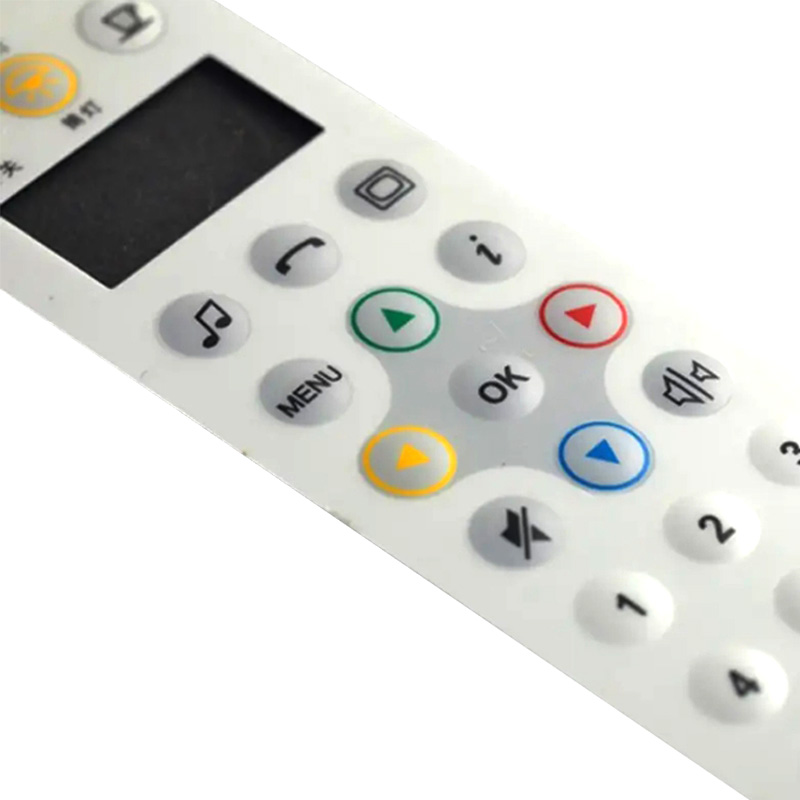
2. Membrane Switch Embossing Shape Inspection
Purpose: Ensure the embossed area is correctly formed.
Check visually or with magnification:
Acceptable:
Smooth rounded edges
Uniform height
No wrinkles
No cracks
No whitening marks on the film
Reject:
Sharp corners
Uneven forming
Film stress cracks
Delamination around the embossed area
3. Mechanical Press Test (Durability Test)
Purpose: Verify the embossing can withstand repeated operation.
Typical test:
Press the embossed key repeatedly using a test machine.
Apply the designed operating force.
Test cycles may be:
100,000 cycles
500,000 cycles
1 million cycles (depending on application)
Check after testing:
Embossing height remains stable
No collapse
No cracking
No loss of tactile feel
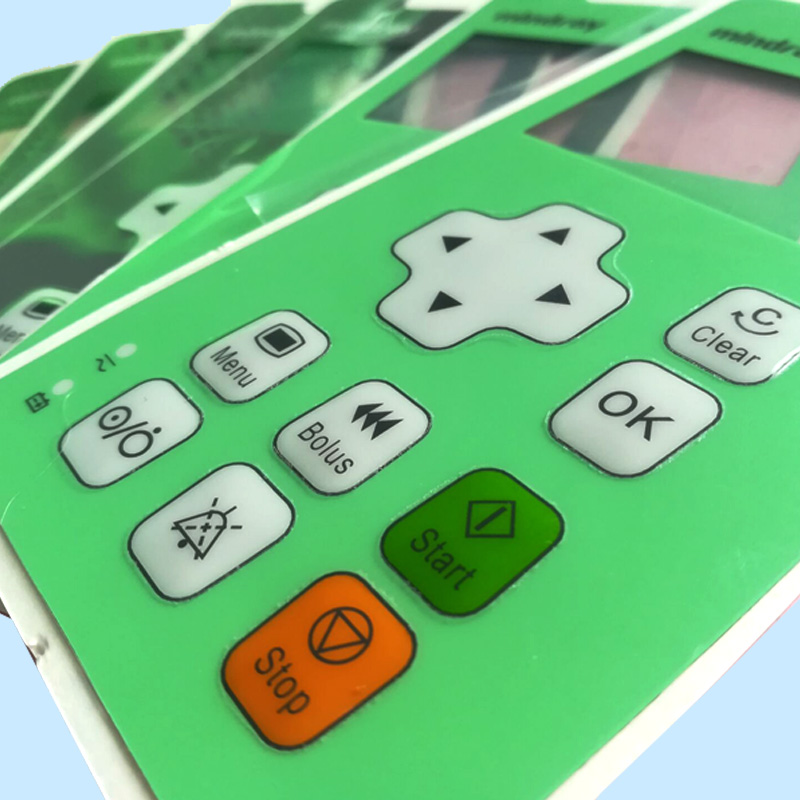
4. Tape Adhesion Test Around Embossing
Purpose: Check if the printed layer or coating cracks after embossing.
Procedure:
Apply 3M adhesion tape (for example 600 or 610 tape).
Press firmly.
Peel at a controlled angle.
Inspect ink/texture removal.
Especially important for:
Polycarbonate overlays
Polyester overlays
UV hard coating surfaces
5. Membrane Button Temperature & Environmental Test
Embossing can change after temperature exposure.
Typical tests:
High temperature:
70°C–85°C for 24–72 hours
Low temperature:
-20°C to -40°C depending on application
Check:
Embossing height
Film cracking
Shape recovery
Adhesive failure
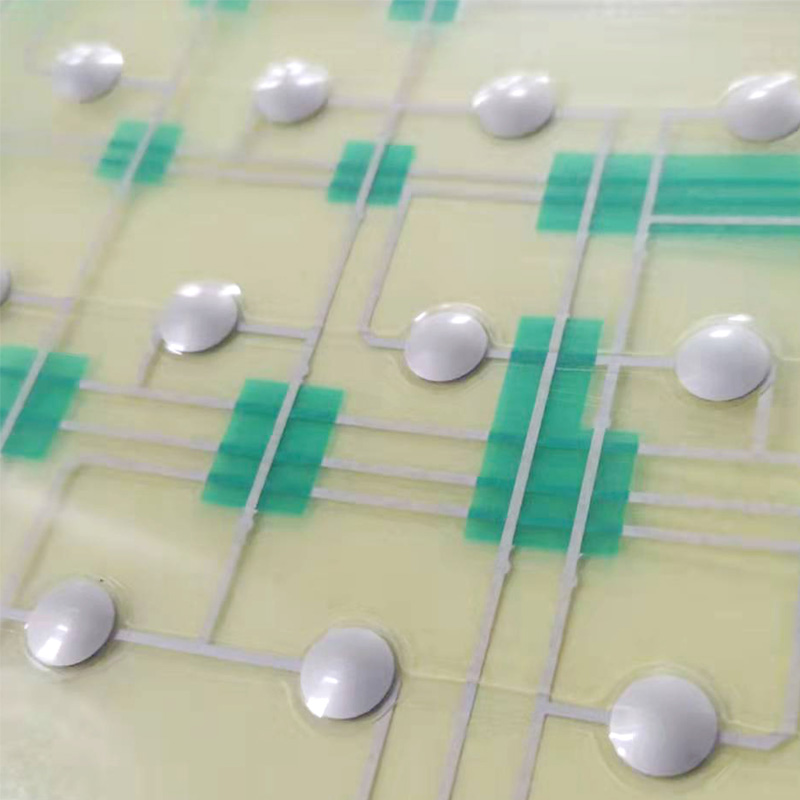
6. Tactile Feel Test (Operator Evaluation)
For keypads with embossed buttons, evaluate:
Finger guidance
Pressing comfort
Return feeling
Alignment with metal dome or tactile switch
A professional test may measure:
Peak force
Travel distance
Return force
Click ratio
Using a force-displacement tester gives objective data.
7. Dimensional Inspection After Embossing
Embossing can stretch the graphic film.
Check:
Key position accuracy
Hole alignment
LED window position
Overall dimensions
More info visit:www.jcftechnology.com